
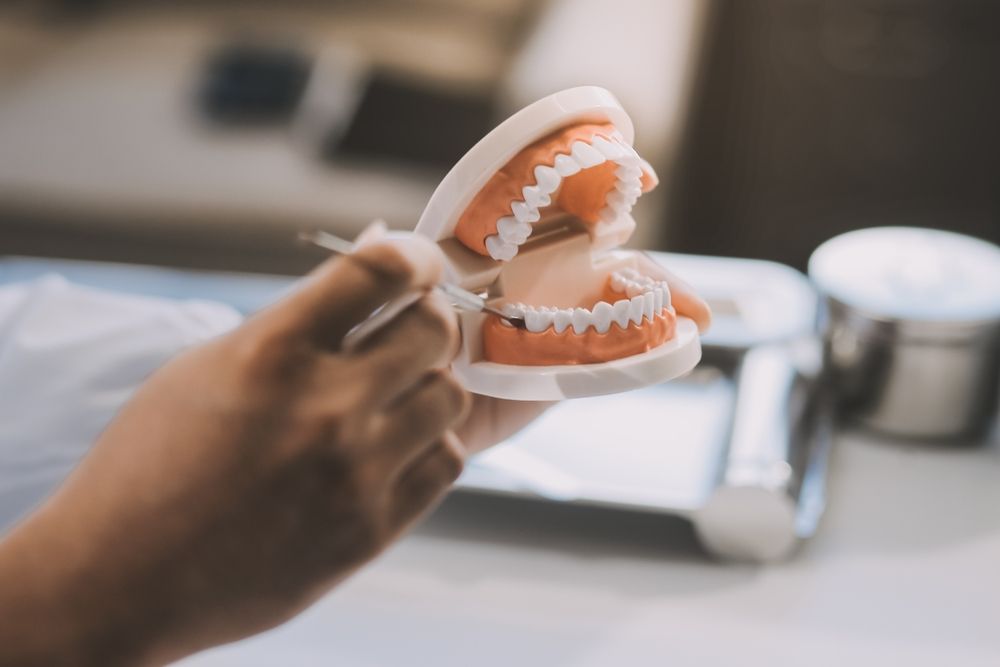
Oral health contributes significantly towards comfort, food habits and clear articulation. The loss of teeth or factors that destroy it can make day to day activities harder than anticipated. Dentures are made to fit people who do not have teeth to replace them in order to have the mouth balanced. They promote the form of the face, chewing strength, and daily comfort. Having appropriate guidance, they may feel natural and trustworthy.
How dentures support oral function
What dentures are and why they matter
Dentures are custom made oral equipment and are designed to act like replacement of missing teeth. They sit well on the gums and assist to normalize the movement of the mouth. They are functional and good when adequately fitted. Dentures are used by many individuals in order to preserve a healthy mouth following the loss of teeth. They hold remaining teeth in position and lessen the effort made on the jaw. This renders them a vital component of long term care.
Types of dentures commonly used
Varied forms of dentures are used to meet various occasions. Every alternative is themed on the objectives of oral condition and comfort. The knowledge of such types assists in informed decisions.
- Full dentures -Full dentures are designed to resemble all the teeth either in the upper or the lower jaw; in any case where there is no natural tooth. Full dentures restore chewing capacity and support of the face.
- Partial dentures- These dentures are applied when few of the natural teeth are intact and they fill gaps thereby averting the movement of the other teeth.
- Implant supported dentures- These dentures are held by some implants to make them more stable, which lowers the movements when eating and talking.
- Immediate dentures – These dentures are made immediately (immediately after teeth extraction) and they enable the wearer to be functional even through the healing process.
- Custom fitted dentures- Such dentures are made based on accurate measurements, which enhance the comfort of the dentures and the reduction of the pressure points with time.
Step-by-step guide to adjusting to dentures
It requires time and patience to get used to dentures. The process will be easier when followed in a structured approach. Simple routines can enhance comfort in a bid to make life better.
- Start with soft foods – Initial intake of soft foods helps in lowering the pressure and the mouth to acclimatize to new chewing patterns.
- Practice speaking daily – Reading aloud forces the speech process to be clear and muscles to be well coordinated.
- Wear dentures consistently -Regular use will enable the gums and the muscles to adapt more to each other.
- Clean dentures properly- Rinsing the dentures every day will help to care against irritation, and keep the dentures hygienic.
- Attend follow-up checks -Adjustments are done to achieve correct fit and minimize sore points in time.
Choosing the right dentures approach
The choice of dentures canberra is determined by the objectives of oral health and levels of comfort. Professional evaluation reflects good fit and performance. Mentorship by the experienced providers facilitates the improved results. Properly designed dentures are capable of making life easier on a daily basis. They facilitate eating, talking and smiling.
Summary
Dentures contribute directly to the following areas of the restoration of day-to-day oral functions and comfort. They promote oral health over the long-run with the appropriate type, oral care regimen, and modifications. Guidance and necessary care allows dentures to be practical and easy to use in daily life.